Click to return to the Real Presence Eucharistic Education and Adoration Association Home Page

Jump to Page Content Jump to Navigation Links
THE REAL PRESENCE The Real Presence of Christ in the Eucharist CHRIST IN THE EUCHARIST

Eucharist Introduction Real Presence Scripture Early Church Vatican II Testimonies Miracles Priesthood and Religious Life Mass and Liturgy Holy Communion Adoration Other Topics Resources Links

Jesus Christ

Jesus Christ Passion of Christ Life with Christ Jesus in Scripture
Christ the King Sacred Heart Divine Mercy The Holy Face
Links Index


Jesus ChristJesus Christ


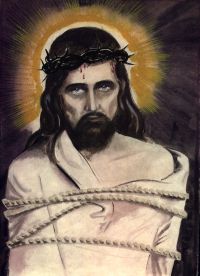
Passion of ChristJesus - Bound for Sentencing Before Pilate

  • One Man - Lenten Reflections
    One Man is a series of Lenten reflections which will attempt to contrast the difference between the "beautiful" crucifixes with which we are familiar and the real event as it happened. The title One Man comes from a homily given by the Rev. Patrick Albert, the pastor of the Roman Catholic Community of Forest City, during Lent 2000. Fr. Albert explained in that sermon that Christ, one individual Man, had taken on His shoulders the sins of the world and had gone "all the way" as Father put it. We will attempt to prayerfully comprehend what going "all that way" meant to this One Man [Jesus].

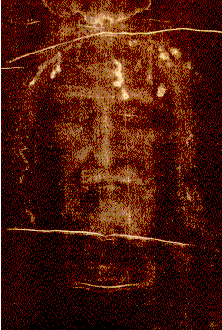
  • Image of the Lord…the Shroud of Turin

  • Holy Shroud Guild

  • The "Sindone" of Tourin


Life with Christ


Jesus in Scripture

  • The New Testament Parables

    Parable is the name given to similitudes drawn from nature or from human experience, especially those containing a short narrative, that Christ used to convey the spiritual meaning of the mysteries He came to teach the world.

    There is no sharp line to distinguish parables from the minor metaphors and similes that are a feature of Christ’s pedagogy. Scholars commonly agree that there are no parables in the Gospel of St. John. The fourth Gospel does, however, contain sayings that Jesus used about Himself which resemble parables, e.g., He called Himself the Good Shepherd. But parables in the strict sense are found only in the Synoptic Gospels.

    Understandably there is divergence among authorities regarding the classification of the parables. Our grouping is based on the general idea of the Kingdom of God. Moreover, we subdivide this large classification into three categories, namely parables dealing with the Kingdom of God as such; those treating of membership in the Kingdom and those concerned with the conduct or responsibilities of persons who belong to God’s Kingdom, and finally those parables revealing the Head of the Kingdom and His relationship to its members.

  • I. Parables of the Kingdom of Heaven and its Gradual Development, its Nature and Activity

    1. The Sower (Matthew 13:3-9, 18-23; Mark 4:3-9, 13-21; Luke 8:5-8, 11-15).

    2. The Seed Cast into the Ground (Mark 4:26-29).

    3. The Tares or Cockle (Matthew 13:24-30, 37-43).

    4. The Mustard Seed (Matthew 13:31+; Mark 4:30-32; Luke 13:18+).

    5. The Leaven (Matthew 13:33; Luke 13:20+).

    6. The Hidden Treasure (Matthew 13:44).

    7. The Pearl of Great Price (Matthew 13:45+).

    8. The Fishing Net (Matthew 13:47-50).

    9. The Great Harvest and the Few Laborers (Matthew 9:37+; Luke 10:2).

    10. The Bridegroom and the Wedding Guests (Matthew 9:14+; Mark 2:18-20; Luke 5:33-35).

    11. The Old Garment and the Old Wine Bottles (Matthew 9:16+; Mark 2:21+; Luke 5:36-38).

    12. Old and New Wine (Luke 5:39).

    13. The Wayward Children (Matthew 11:16-19; Luke 7:31-35).

    14. Real Defilement (Matthew 5:10+; 15:20; Mark 7:14-23).

    15. Uprooted Plants and Blind Leaders of the Blind (Matthew 15:13+; Luke 6:39).

    16. The Children and the Dogs (Matthew 15:26+; Mark 7:27+).

    17. The Kingdom of Christ and the Kingdom of Satan (Matthew 12; Mark 3; Luke 11).

    18. The Laborers in the Vineyard (Matthew 20:1-16).

    19. The Two Sons (Matthew 21:28-32).

    20. The Wicked Husbandman (Matthew 21:33-46; Mark 12:1-12; Luke 20:9-19).

    21. The Marriage of the King’s Son (Matthew 22:1-14).

    22. The Great Supper (Luke 14:16-24).

    23. The Signs of the End (Matthew 24:32+; Mark 13:28+; Luke 21:29-31).

    24. The Body and the Eagles (Matthew 24:28; Luke 17:37).

    II. Parables Concerning the Members of the Kingdom of God Individually and their Responsibilities

    1. The Barren Fig-Tree (Luke 13:6-9).

    2. The Good Tree and the Bad (Matthew 7:16-20; 12:33-35; Luke 6:43-45).

    3. The Pharisee and the Publican (Luke 18:9-14).

    4. The Last Place at the Feast (Luke 14:7-11).

    5. The Poor Guests (Luke 14:12-14).

    6. The Rich Fool (Luke 12:16-21).

    7. The Vigilant Servants (Mark 13:33-37; Luke 12:35-38).

    8. The Thief in the Night (Matthew 24:43+; Luke 12:39+).

    9. The Faithful Steward (Matthew 24:45-51; Luke 12:41-48).

    10. The Ten Virgins (Matthew 25:1-13).

    11. The Closed Doors (Luke 13:25-30).

    12. The Five Talents (Matthew 25:14-30).

    13. The Pounds (Luke 19:11-27).

    14. The Unprofitable Servants (Luke 17:7-10).

    15. The Good Samaritan (Luke 10:30-37).

    16. The Unjust Steward (Luke 16:1-9).

    17. The Rich Man and Lazarus (Luke 16:19-31).

    18. Serving Two Masters (Matthew 6:24; Luke 16:13).

    19. The Unmerciful Servant (Matthew 18:23-35).

    20. The Mote and the Beam (Matthew 7:3-5; Luke 6:41+).

    21. Pearls before Swine (Matthew 7:6).

    22. The Son Asks His Father for Bread (Matthew 7:9-11; Luke 11:11-13).

    23. The Friend Coming at Midnight(Luke 11:5-8).

    24. The Unjust Judge (Luke 18:1-8).

    25. The Two Debtors (Luke 7:41-43).

    26. The Salt of the Earth (Matthew 5:13; Mark 9:50; Luke 14:34+).

    27. The Lamp on the Lampstand, and the City on the Mountain (Matthew 5:14-16; Mark 4:21; Luke 8:16; 11:33).

    28. The Builder, the King Going to War (Luke 14:28-33).

    29. The Disciples, Servants and the Household (Matthew 10:24+; Luke 6:40; John 13:16; 15:20).

    30. The Prudent Householder (Matthew 13:52).

    31. The House Built on a Rock and the House Built on Sand (Matthew 7:24-27; Luke 6:47-49).

    III. Parables on the Head of the Kingdom and His Relation to His Members

    1. The Light of the World (John 3:19-21; 8:12; 9:5; 12:35+, 46).

    2. The Grain of Wheat (John 12:24+).

    3. The Vine (John 15:1-8).

    4. The King’s Son Free from Tribute (Matthew 17:23-26).

    5. The Physician (Matthew 9:12+; Mark 7:12; Luke 5:31+).

    6. The Good Shepherd (John 10:1-16).

    7. The Lost Sheep (Matthew 18:12-14; Luke 15:3-7).

    8. The Lost Coin (Luke 15:8-10).

    9. The Prodigal Son (Luke 15:11-32).

    Note: the above list of parables is all but exhaustive. It includes what some writers consider parables in the Gospel of St. John. It also includes short parabolic statements that follow the pattern of full-length parables, and are to be interpreted in the same way.


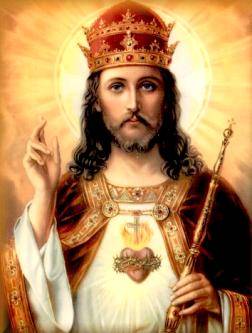
Feast of Christ the KingChrist the King

  • (Quas Primas) Encyclical on the Feast of Christ the King
    by Pope Pius XI, December 11, 1925.

  • Christ the King (Brookline Carmel Bulletin)
    That Jesus Christ is a King is incontestable (to those who believe in Sacred Scripture). The entire second Psalm speaks of the universal reign of the Messiah. Among other things, it states: “Ask of me and I will give you the nations for an inheritance and the ends of the earth for your possession. You shall rule them with an iron rod; you shall shatter them like an earthen dish.” And in 1 Timothy 6, 16, Apoc. 17, 14 and 19, 16 He is called explicitly: “the King of Kings and Lord of lords.”

  • Litany of Christ the King (Catholic Culture)
    “Though this Feast is a new one, promulgated by Pope Pius XI in 1925 in his Encyclical Quas Primus, it is a most awesome and important one! Vive Christus Rex! On this day, we pray for the conversion of all to Christ, and for all governments to recognize Him as King and conform their laws to His teachings. This is the only way to peace!”

  • Quas Primas - On the Feast of Christ the King (Catholic Forum)
    by Pope Pius XI, December 11, 1925.

  • Prayer and Devotion (Daily Catholic)
    Consecration and Prayers to Christ the King.

  • Long Live Christ the King by Reverend Philip M. Stark
    "To us who live in the latter part of the twentieth century, it is strange to realize that the Feast of Christ the King has been celebrated by the Universal Church only for fifty-five years. It was established by the encyclical Quas Primas of Pope Pius XI, promulgated on December 11,1925, “to renew in the minds and hearts of the faithful the ancient concept of Christ as divine King Who, enthroned at the right hand of the Father, will return at the end of time in might and majesty. It is true that in the liturgy's sacred sanctuary this concept of Christ and His Kingship has never lost lustre. It accompanies us throughout the Church's year of grace; daily we are brought face to face with it in missal and breviary; but the faithful to a great extent have forgotten it. The stern truth of divine kingship will give something meaty and strengthening to popular piety so strongly inclined toward sentimentalism. Furthermore, the faithful will be led to visualize Christ as He is presented in the liturgy…”

  • Christ the King Reigns by Bishop Thomas V. Daily, Supreme Chaplain (Knights of Columbus)
    “In this month's column I will share with you some reflections based on my participation in the 48th International Eucharistic Congress in Guadalajara, Mexico, last October…Jesus is present — yesterday, today and always”


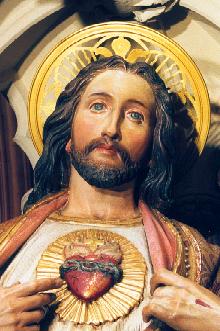
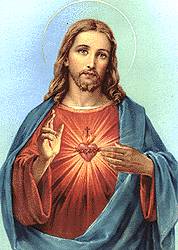
Sacred HeartThe Sacred Heart of Jesus


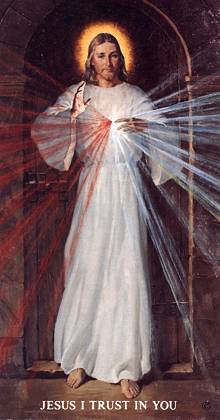
Divine MercyThe Image of the Divine Mercy


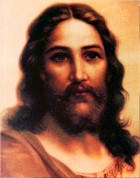
The Holy FaceThe Holy Face of Jesus

  • The Holy Face of Jesus - Fr. Russel Schultz, S.T.D. (Holy Face Association)
    "That is the purpose of this devotion: to be able to look the suffering Lord in the eye and gain an insight into the extent of His love for us. He has told us he came not for the holy and the saved, but for sinners. So, we should turn to Him with confidence and joy in the realization that He is our only true friend. You can always face someone that loves you, for you know that you will find forgiveness and support in their eyes. The Holy Face of Jesus is the beacon of salvation: the lighthouse of redemption that shines across the stormy seas of life to guide us to the safety of the harbor of Eternal life. Look Him in the eye. You have nothing to fear. He will not look at your sins. He will look for the love in your heart. And, if you have truly studied that Face, so battered and scarred, then He will find in your heart the love that He is seeking from you."

  • The Holy Face of Jesus


Links Index


The drawing of Jesus, bound for sentencing before Pilate, is
is used with the permission of the estate of Margaret Ahern.
Copyright © 1999 by Margaret Ahern. All Rights Reserved.

The image of the Divine Mercy by Robert Skemp ©1982
Congregation of the Marians of the Immaculate Conception, Stockbridge MA  01263
All rights reserved. Published with permission.


PicoSearch
What's New    Site Index

Eucharist Introduction Real Presence Scripture Early Church Vatican II Testimonies Miracles Priesthood and Religious Life Mass and Liturgy Holy Communion Adoration Other Topics Resources Links

THE REAL PRESENCE OF CHRIST IN THE EUCHARIST

Home | Directory | Eucharist | Divine Training | Testimonials | Visit Chapel | Hardon Archives

Adorers Society | PEA Manual | Essentials of Faith | Dictionary | Thesaurus | Catalog | Newsletters

Real Presence Eucharistic Education and Adoration Association
7030 West 63rd Street
Chicago, Illinois 60638
Phone: 773-586-2352
Fax: 773-586-7781
Contact Us
Internet: www.therealpresence.org
Office Hours
Monday, Wednesday, Friday
8:30am - 3:30pm CST

Copyright © 2000 by www.therealpresence.org
All rights reserved worldwide.
No part of this publication may be reproduced, stored in a retrieval system, or transmitted, in any form or by any means, electronic, mechanical, photocopying, recording or otherwise, without the prior written permission of www.therealpresence.org